Property taxes are a math system.
Budgets set the taxes. Assessments determine the share.
Built around New Jersey law, ratios, and Chapter 123.
Not advocacy. Not legal advice. Just math, data, and sources.
When the math drifts, the burden shifts.
Explore the Mechanics
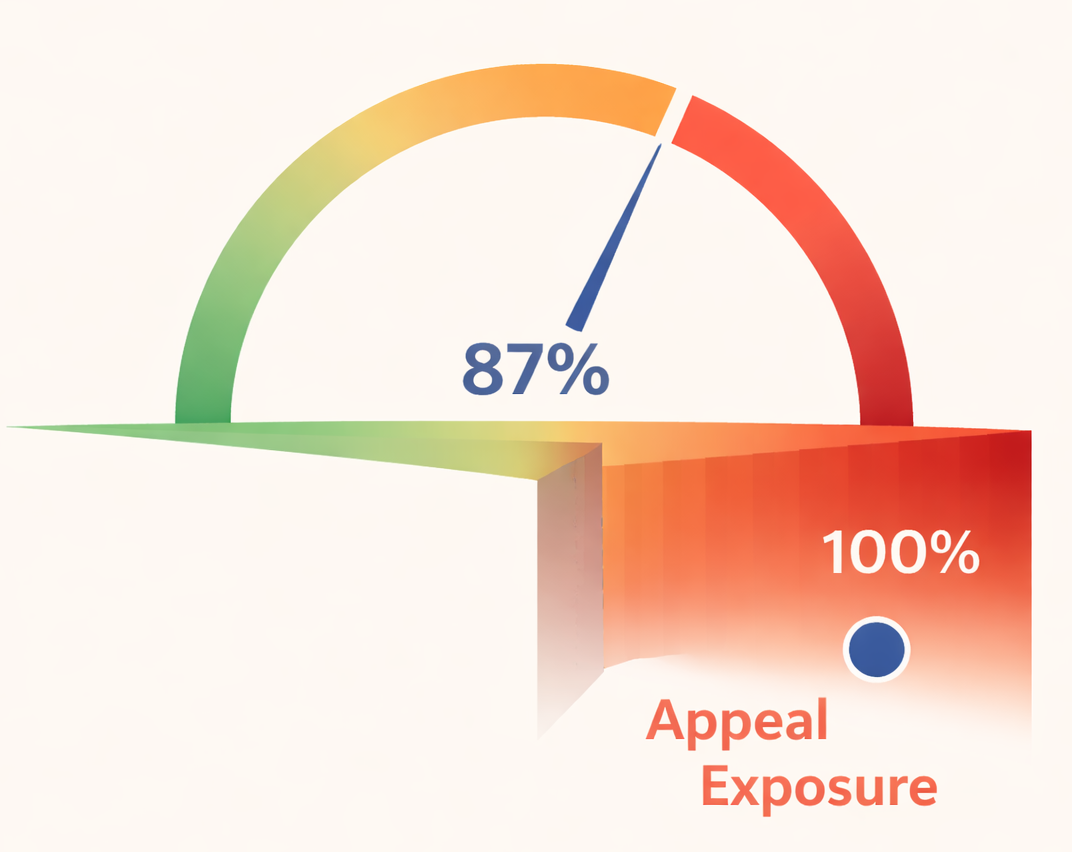
The 87% Cliff
When the average ratio drops below 87%, commercial properties at 100% become appeal-exposed.
Learn more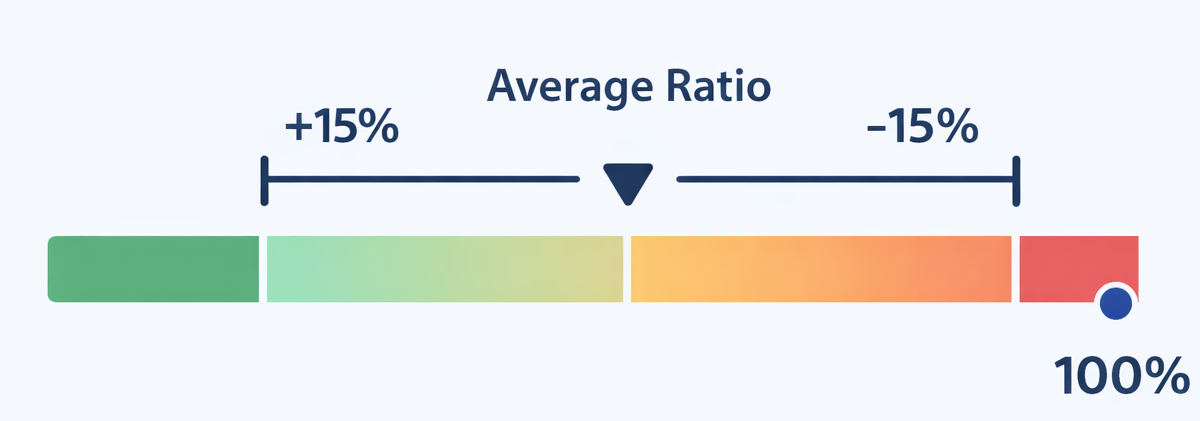
The Fairness Test
See how the ±15% common level range works and why it matters for appeals.
ExploreUnderstand My Bill
Calculate your tax bill and see how levy and share changes affect what you pay.
CalculateUsed by every New Jersey taxing district.
Your property tax is your share of the total levy:
- Budgets set the levy
- Assessments determine the share
What Assessments Do & Don't Do
Rising assessments don't raise taxes. Rising budgets do.
Higher Assessments Do NOT Create More Taxes
In New Jersey, total property taxes are set by municipal, school, county, and special-purpose budgets. Once those budgets are adopted, the total levy is fixed. Changes in assessments only affect how that levy is shared, not how much is collected.
Assessments redistribute the levy
When assessments fall out of alignment with market values, some owners pay more than their fair share while others pay less. Regular maintenance keeps the distribution fair.
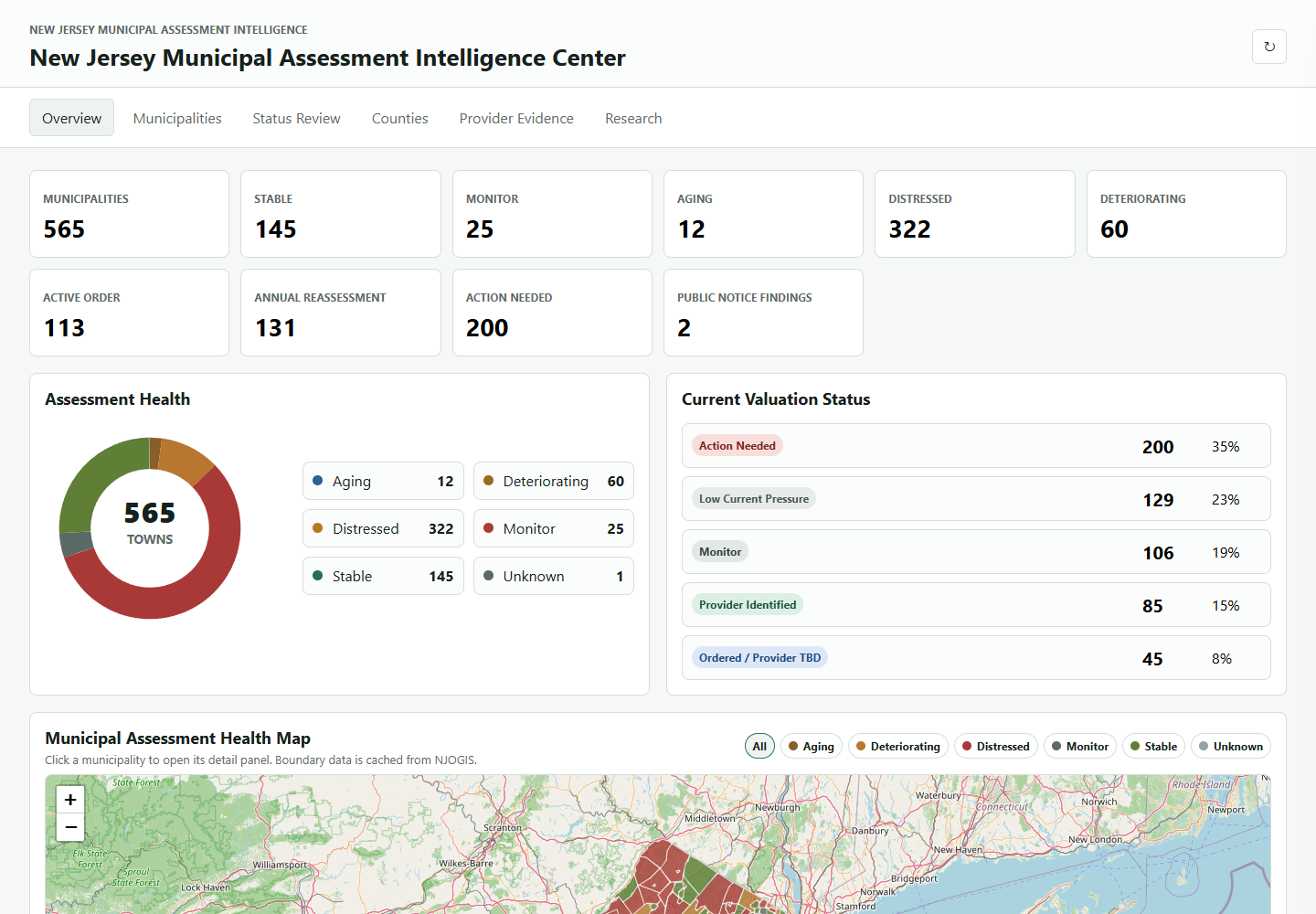
Live statewide tool
New Jersey Municipal Assessment Intelligence Center
Explore municipal assessment conditions across New Jersey. Review assessment-health indicators, current valuation status, municipal and county patterns, provider evidence, and source follow-up in one interactive center.
Live preview — currently hosted as a separate tool while it is prepared for a future PropertyTaxMath.org migration.
Open Assessment Intelligence CenterSpending determines how much is raised. Assessments determine who pays what.